

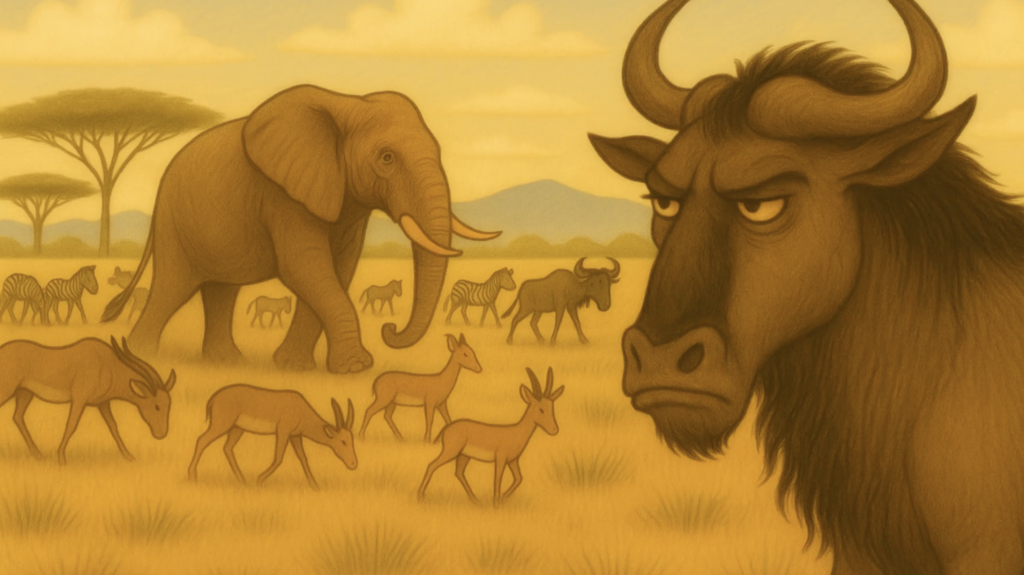
The Elephant, the Wildebeest and the Broken Path (the third book in my African Fable Series) explores “the impatience of youth versus the wisdom of age”.
The timeless struggle between the haste of youth and and wishing we’d listened to the elders who tried to warn us plays out every day across generations. This is beautifully illustrated in the heart of Africa’s greatest natural wonder: the Great Migration.
Tembo the Elephant: the Keeper of the Memory
I chose an elephant as the story’s wise elder as Elephants are known as the memory keepers of Africa. Their matriarchs lead their herds using knowledge passed down through generations—where to find water during drought, which paths are safe, which seasons bring danger. An elephant never forgets, and this remarkable memory is communal, ancestral, vital.
Tembo is old, slow, and deliberate. He doesn’t rush because he knows where he’s going. He represents lived experience. Tembo stands as a quiet reminder: old age has value. Elders carry maps we can’t see, lessons learned through scars, and patience earned through time.
Nuru the wildebeest - the voice of impatience
Nuru, the young wildebeest challenges everything. Wildebeest are creatures of urgency. They’re born running. Within minutes of birth, a wildebeest calf must stand and keep pace with the herd or risk being left to predators. Speed is survival. When I created Nuru, I gave him all the characteristics of youth we recognize: energy, confidence, impatience, and a deep belief that he knows better.
Nuru looks at Tembo’s slow, winding path and sees inefficiency. Why follow the long route when there’s clearly a shortcut? Why trust ancient ways when the world is changing?
It’s the same question every generation asks: Why should we do it your way? And sometimes, that question leads to innovation. But sometimes—often—it leads straight to the broken path.
The Broken Path
The “broken path” isn’t just a dangerous trail. It’s a metaphor for every shortcut that seems smart until it isn’t.
In the story, Nuru’s impatience leads not just himself but others astray. The consequences ripple beyond him—affecting the herd, the Maasai village nearby, and the delicate balance of the ecosystem. Because that’s the truth about impatience: it rarely only affects us alone.
The Serengeti and the great migration
The Serengeti hosts one of the planet’s most spectacular events—the annual migration of over two million wildebeest, zebras, and gazelles. It’s a journey of survival, instinct, and collective memory that has repeated itself for thousands of years.
This was a perfect backdrop for my story. The Great Migration is all about following ancient paths—routes carved into the land over thousands of years. These paths lead to water, to grazing lands, to survival. The herds don’t question them. They trust the journey because their ancestors survived by walking the same route.
But what happens when that trust is broken?
The Old know the way
The story’s closing moral is simple but profound: “The old may walk slowly, but they are wise and always know the way.”
Ultimately, this story isn’t just about animals on the Serengeti. It’s about all of us trying to navigate life’s great migration—the journey from birth to death, from ignorance to wisdom, from impatience to peace.
Check out this overview of The Elephant, the Wildebeest and the Broken Path.